AIDS (Acquired Immunodeficiency Syndrome) is a chronic disease caused by the Human Immunodeficiency Virus (HIV). The HIV virus attacks and gradually destroys CD4+ T-lymphocytes, which are the cells in the human immune system responsible for fighting infections. When the immune system is severely damaged (typically defined as a CD4 cell count falling below 200 cells per cubic millimetre), the individual progresses to the AIDS stage, becoming highly susceptible to various "opportunistic infections" or cancers, which pose a serious threat to life.
Routes of Transmission and Real-Life Examples:
- Sexual Contact (The primary route of transmission)
- Example: During unprotected vaginal or anal intercourse, if one partner is living with HIV, the virus can enter the other partner's body through mucous membranes (such as micro-tears in the rectum, vagina, urethra, or mouth).
- Key Concept: The higher the viral load, the greater the risk of transmission. For individuals living with HIV who consistently take antiretroviral medication and successfully suppress the virus, the risk of transmitting HIV through sex is extremely low. This concept is known as "U=U" (Undetectable = Untransmittable), a crucial scientific fact in modern prevention and destigmatisation efforts.
- Blood Transmission
- Example:
- Sharing Needles: Sharing contaminated syringes, needles, or other injecting equipment for drug use.
- Unsafe Medical Procedures: Receiving injections, blood transfusions, or organ transplants where standard infection control protocols are inadequate (this is now extremely rare in Hong Kong as all blood products are rigorously screened).
- Sharing Personal Items: Sharing razors or toothbrushes that might be contaminated with blood. Although the risk is lower, it should still be avoided.
- Example:
- Mother-to-Child Transmission (Vertical Transmission)
- Example: An HIV-positive mother who does not receive any preventive medical intervention during pregnancy, delivery, or through breastfeeding has a 15-45% chance of transmitting the virus to her baby.
- Key Preventive Measures: Through antenatal HIV testing, the administration of antiretroviral drugs to both mother and baby, and the avoidance of breastfeeding, the transmission risk can be significantly reduced to below 1%.
How to Prevent AIDS
- Safer Sex:
- Correct and Consistent Condom Use: This is one of the most effective methods to prevent sexual transmission.
- PrEP (Pre-Exposure Prophylaxis): A daily preventive medication for HIV-negative individuals at higher risk of infection (e.g., those with an HIV-positive partner or multiple partners), with over 90% efficacy.
- PEP (Post-Exposure Prophylaxis): Emergency medication taken within **72 hours** after a potential exposure to HIV (e.g., condom breakage). A 28-day course can reduce the risk of infection.
- Avoid Blood Contact:
- Absolutely never share needles or other injecting equipment. Hong Kong operates a **"Needle and Syringe Exchange Programme"** which provides clean equipment to people who inject drugs to block virus transmission.
- Ensure all skin-piercing procedures (e.g., acupuncture, tattooing, body piercing) use single-use or strictly sterilised instruments.
- Be Informed and Get Tested:
- Know your own and your partner's HIV status. Various districts in Hong Kong provide free, confidential, and anonymous HIV antibody testing services.
- Pregnant women should receive routine antenatal HIV testing.
- Treatment as Prevention:
- For individuals living with HIV, starting and adhering to Antiretroviral Therapy (ART) early suppresses the viral load to an undetectable level. This allows them to stay healthy while virtually eliminating the risk of transmitting the virus through sex (U=U).
Current Status and Data Analysis of HIV/AIDS in Hong Kong (Latest 2023 Situation)
According to the latest statistics from the Centre for Health Protection of the Hong Kong Department of Health, the HIV/AIDS epidemic in Hong Kong shows the following characteristics:
I. New Infection Numbers and Trends
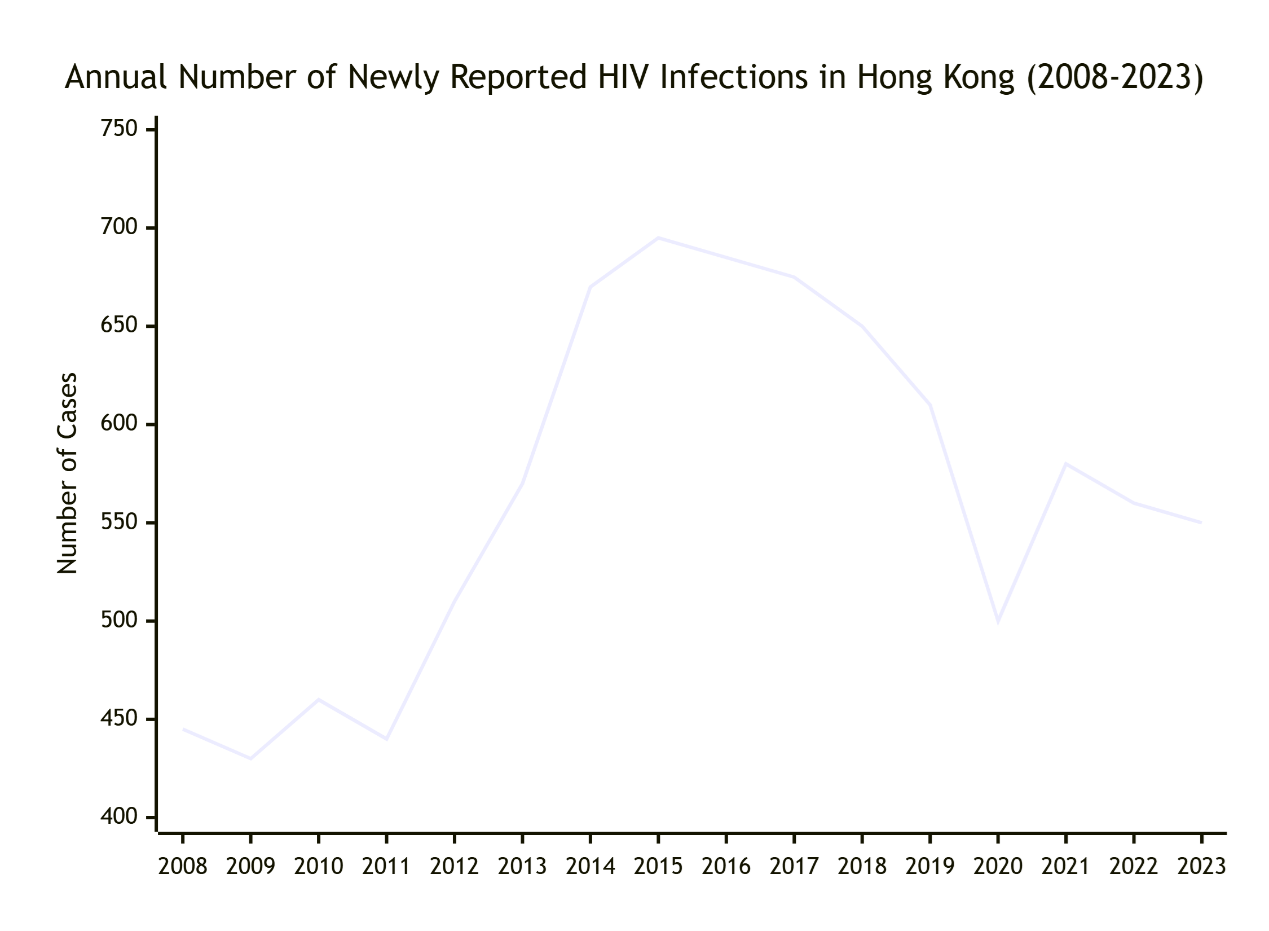
The chart below shows the number of newly reported HIV infection cases in Hong Kong each year since 2008. After a slow increase over the past decade, the overall figure has stabilised or shown slight fluctuations in recent years. This reflects that ongoing prevention and testing efforts have had a certain degree of effectiveness, but the epidemic is not yet under control.
Source: Centre for Health Protection, Hong Kong Department of Health
II. Distribution of Main Transmission Routes (2023 Data)
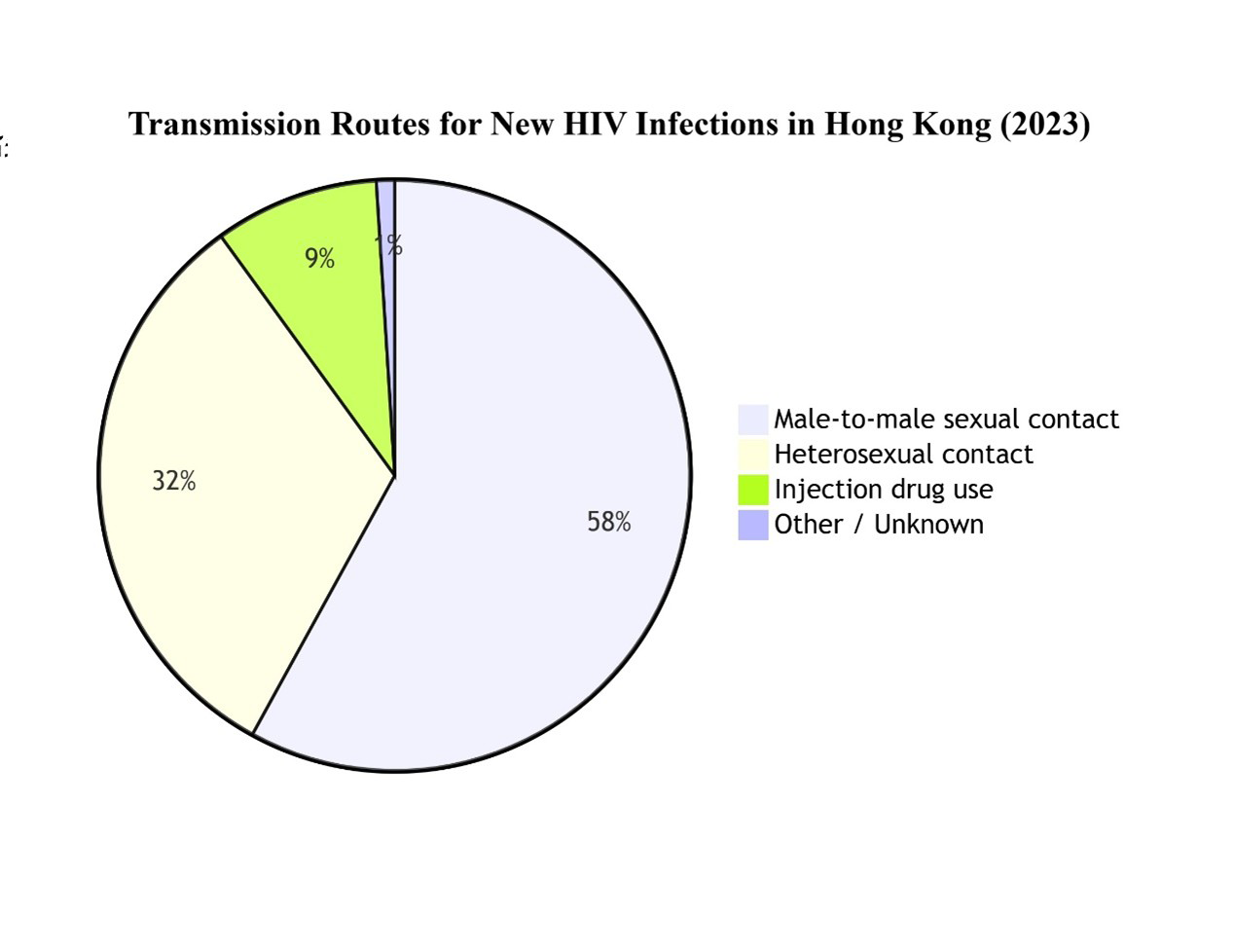
Sexual contact remains the predominant mode of transmission. Among the 563 new infection cases reported in 2023:
• Male homosexual/bisexual contact accounted for 58% (approximately 326 cases)
• Heterosexual contact accounted for 32% (approximately 180 cases)
• Injecting drug use accounted for <1%
• Other/Unknown accounted for approximately 10%
III. Gender and Age Analysis of Infected Individuals
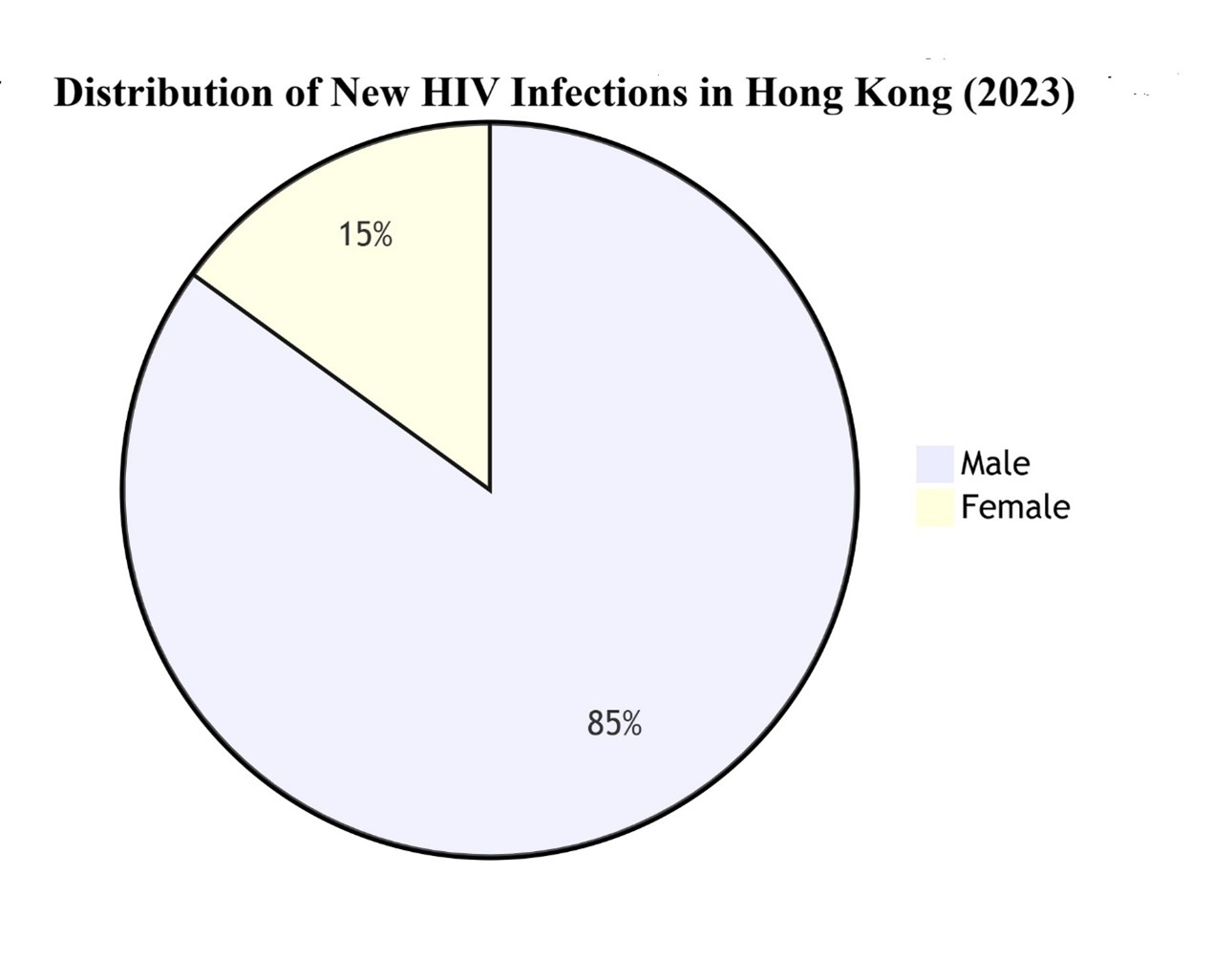
• Gender Distribution: New infection cases remain predominantly among males. In 2023, males constituted 85% (479 cases) of the total, while females accounted for 15% (84 cases). This disparity is directly related to men who have sex with men (MSM) being a key local high-risk group.
• Age Distribution: The age of infected individuals spans all groups, but sexually active young and middle-aged adults aged 20-49 form the primary affected demographic. Recent data indicates a noteworthy rising trend in the number of reported infections within the 50 years and above age group.
IV. Current Challenges and Responses in Hong Kong
- Interventions Targeting Key Populations: The epidemic remains concentrated among men who have sex with men (MSM). Our Society and partner organisations continuously engage this group through outreach, social media campaigns, promotion of PrEP, and encouragement of regular testing.
- Reducing Stigma and Discrimination: Societal stigmatisation of people living with HIV remains the most significant barrier to testing and early treatment. Public education is paramount.
- Promoting Early Testing and Treatment: A proportion of individuals are still diagnosed only after their immune systems have been severely compromised (i.e., at the AIDS stage). We are committed to promoting the benefits of "early testing, early treatment" and advocating the "U=U" concept to improve the quality of life for people living with HIV and break the chain of transmission.
- Addressing the Ageing Infected Population: With the widespread availability of effective treatment, many people living with HIV are surviving long-term, leading to increasing needs for chronic disease management and psychosocial support.
Conclusion: Hong Kong's HIV/AIDS epidemic has entered a "concentrated epidemic" stage and shows signs of stabilisation. The future focus of prevention and control lies in targeted prevention education for high-risk groups, maximising efforts to promote testing and treatment, and continuously combating stigma through education, ultimately striving towards the goal of "zero new infections, zero discrimination."